The present study showed that the plant by‐products, glutens and concentrates (PLANT) and processed animal proteins (PAP) treatments resulted in better fish growth performance, higher nutrient and energy retentions, and lower FCR than the control treatment. However, in the EMERG treatment, in which the fish were fed a diet with micro / macroalgae, insect flours and yeasts in the treatment, they resulted in lower fish growth performance, higher FCR and less nutrient and energy retention than other treatments. The significant improvement in FCR found for fish fed PLANT and PAP diets and the high protein digestibility of these diets contribute towards minimizing the environmental impacts of seabream production.
SPAROS manufactured all experimental diets used in this trial.
http://eauh2014.fcsh.unl.pt/aerius.html http://eauh2014.fcsh.unl.pt/amoxicilina.html http://eauh2014.fcsh.unl.pt/brufen.html http://eauh2014.fcsh.unl.pt/diazepam.html http://eauh2014.fcsh.unl.pt/fluoxetina.html http://eauh2014.fcsh.unl.pt/paracetamol.html http://eauh2014.fcsh.unl.pt/sertralina.html viagra pela internet http://eauh2014.fcsh.unl.pt/voltaren.html http://eauh2014.fcsh.unl.pt/xanax.html
This study was supported by the Portuguese Foundation for Science and Technology (Ministry of Science and Higher Education, Portugal and European Social Funds) through projects UID/Multi/04326/2019 to CCMAR, PTDC/MAR‐BIO/3034/2014 to JF and contract DL57/2016/CP1361/CT0033 to CA.
You can access the article here.


 https://www.sparos.pt/wp-content/uploads/2026/09/NEWS.png
641
1030
Tatiana Poletto
https://www.sparos.pt/wp-content/uploads/2026/09/logo-color-navbar-300x138.png
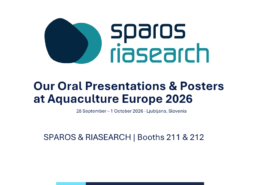
Tatiana Poletto2026-09-23 09:26:582026-09-23 09:27:48SPAROS & RIASEARCH at Aquaculture Europe 2026
https://www.sparos.pt/wp-content/uploads/2026/09/NEWS.png
641
1030
Tatiana Poletto
https://www.sparos.pt/wp-content/uploads/2026/09/logo-color-navbar-300x138.png
Tatiana Poletto2026-09-23 09:26:582026-09-23 09:27:48SPAROS & RIASEARCH at Aquaculture Europe 2026